
As summarized by my colleague David G. Carpenter, the Vermont Public Utility Commission recently finalized its rules on energy storage projects, set forth in PUC Rule 9.000, effective May 1, 1996. Among the features is a fast-track permitting route for battery-based energy storage facilities between 100kW(ac) – 5MW(ac) proposed for, among other locations, “an existing radio tower site….” On its face, the new rule presents a potential new marketing opportunity for wireless tower developers and managers with facilities constructed in Vermont.
- Yet this curious terminology – “radio tower site” – is new, and has no clear precedent in Vermont’s statutory or regulatory framework. The rule history indicates that Vermont’s transmission utility (VELCO) advocated for the term given that its own tower facilities were connected to the electrical grid in existing compounds throughout the state. But without any existing definition, it bears exploring whether a “radio tower site” is in alignment with other definitions of telecommunications and broadcast infrastructure in Vermont law.
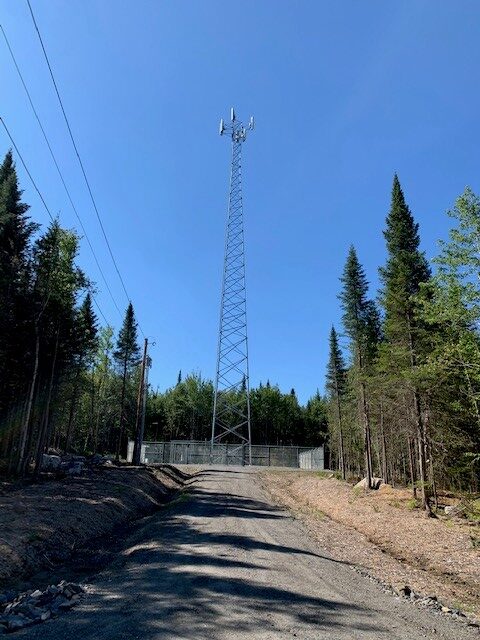
- The PUC terminology typically used for communications infrastructure is “telecommunications facility,” defined in 30 VSA 248a(b)(6) as “a communications facility that transmits and receives signals to and from a local, State, national, or international network used primarily for two-way communications for commercial, industrial, municipal, county, or State purposes and any associated support structure that is proposed for construction or installation that is primarily for communications purposes and any ancillary improvements that are proposed for construction or installation and are primarily intended to serve the communications facilities or support structure.” (Emphasis added.)
- A separate definition in 30 VSA 248a(b)(7) describes “wireless service” (i.e., a subset of “two-way communications”) as encompassing several types of two-way radio services, including: “commercial mobile radio service, … specialized mobile radio service, …. or public or private radio dispatch service,” all based upon terms used in FCC licensing regulations.
- So while “radio tower site” would certainly seem to encompass “telecommunications facilities” permitted under Section 248a (at least those involving a ‘tower’ as opposed to a rooftop-based site, water tank, etc.), the definition leaves open the question of whether towers designed for “one-way radio service” – better known as “broadcast” towers – could also be used for battery storage collocations within their fenced compounds.
- Title 30 provides no reference to “one-way communications” or “broadcast” in a siting context. (The only time broadcast is mentioned concerns the Attorney General’s power to investigate unfair methods of competition by broadcasters – see 30 V.S.A. 518(a)).
- By contrast, Act 250 jurisdiction for what most people typically think of as communications infrastructure extends to “(ix) Any support structure proposed for construction that is primarily for communication or broadcast purposes and that will extend vertically 20 feet or more above the highest point of an attached existing structure, or 50 feet or more above ground level in the case of a proposed new support structure, in order to transmit or receive communication signals for commercial, industrial, municipal, county, or State purposes, independently of the acreage involved.” 10 VSA 6001(3)(A)(ix) (emphasis added).
- This leaves open the possibility that – intentionally or otherwise – the PUC may have used “radio tower sites” to include broadcast tower facilities as eligible as locations for installation of battery storage, even though it has no jurisdiction over broadcast communications.
- As a practical matter, in part because state law (including Section 248a) has encouraged collocation of wireless services equipment, most “broadcast”-based facilities in the State are already accommodating collocated equipment from wireless services providers (public and private). Example: the Vermont Public towers in Mt. Ascutney State Park (Windsor), and the Darling State Forest (Burke) were originally constructed as “broadcast facilities”, but for years have hosted equipment for a wide array of commercial wireless carriers, as well as a myriad of local, state, and federal agencies. Given this reality, it would be logical to interpret “radio tower site” as covering any communications tower with any two-way equipment, even if that tower was originally constructed only for one-way radio broadcasting.

- The tougher scenario to work through is with meteorological towers: although they also broadcast information collected regarding wind conditions, those structures have been designated by the PUC (and by extension the legislature) to be unavailable for “wireless services” collocations, absent a formal conversion request under 30 VSA 246(e). Even then, the PUC has found that such conversion can be used only to host two-way communications services rather than broadcasting. See Petition of Green Mountain Clean Energy, LLC, Docket No. 8579, Order Granting Reconsideration (11/10/2016) (allowing conversion of met tower to communications tower based on proof of lease with paging service and letters of intent from other wireless internet service providers).
PUNCHLINE: While for better or for worse the PUC chose to use a brand new term – “radio tower sites” – for its new rule that raises a jurisdictional quandary, it’s more likely than not that most facilities in the state – whether for broadcast or wireless services – would qualify to host battery storage under the new rule, provided there is two-way communications equipment operating at a facility at the time the battery project is proposed. Tower developers and managers would be wise to market their compounds for energy storage, given Vermont’s renewable energy goals.
Please reach out to Will Dodge or Josh Leckey of the in DRM’s Renewable Energy group for more information.